
The Problem
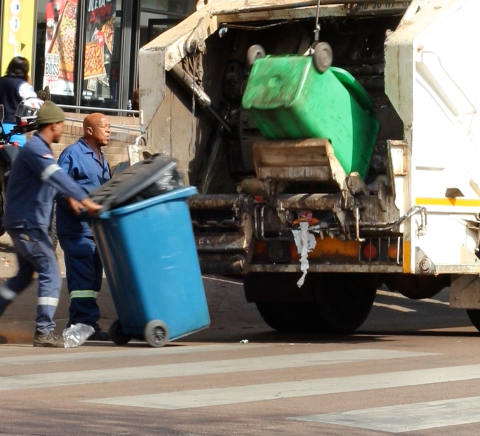
Urban neighbourhoods across South Africa depend on reliable municipal waste services. In metropolitan areas like Tshwane, most households rely on the City’s refuse collection system to keep streets clean and prevent environmental health risks.
Statistics South Africa shows that in Tshwane, 79,6% of households receive refuse removal on a weekly basis, while a further 18,4% rely on communal collection points (9.1%) or their own refuse dumps (9.3%). (Figure 12.2, page 48 – General Household Survey
2024) This means the vast majority of residents depend directly on municipal waste infrastructure to dispose of their household waste properly.
However, service reliability does not depend on collection alone. It also depends on households having access to functional refuse bins. When bins are stolen, damaged or unavailable, waste often accumulates, leading to littering and illegal dumping.
What Residents Are Experiencing
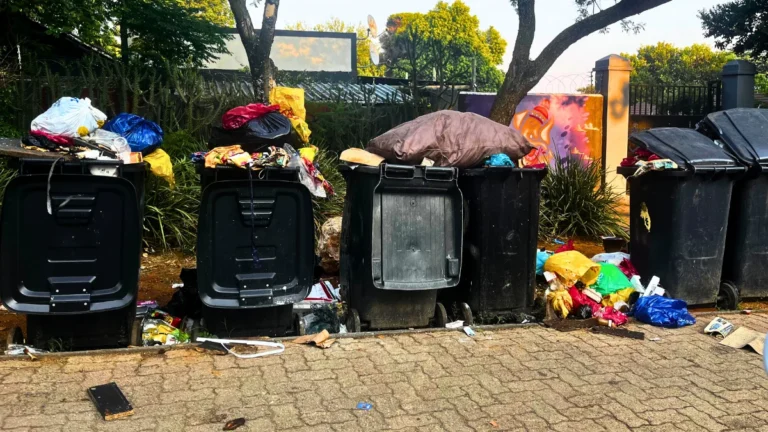
One of the most common challenges is household bins being stolen or mistakenly taken on refuse collection days. In other cases, ageing bins crack or break, making them unusable for safe waste storage.
When households are left without bins, waste often accumulates and litter spreads into streets and pavements.
- Stolen bins after collection days
- Damaged bins that cannot be used safely
- Overflowing public bins in shared spaces
Progress In Ward 56
An active ward-wide initiative is underway to restore reliable waste disposal services for residents.
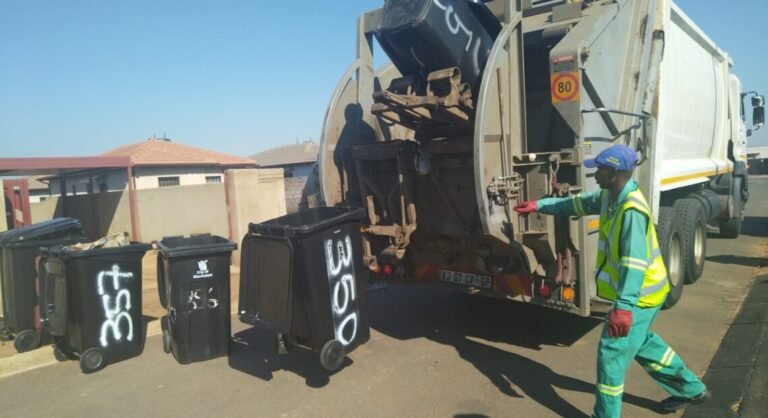
More than 350 bin replacement requests have already been processed. To manage demand effectively, deliveries are being rolled out geographically to ensure fair distribution of resources.
Bailey’s Muckleneuk is nearing completion of all logged requests, while Nieuw Muckleneuk is approximately a quarter through its scheduled deliveries. Remaining suburbs will be attended to in the coming weeks.
In addition, public environment cleanliness has been strengthened through the installation of 16 new waste bins at key locations in and around public parks.
- 16 new public park bins installed
- 350+ bin replacement requests processed
- Suburb-by-suburb rollout approach
- Bailey’s Muckleneuk nearing completion
- Nieuw Muckleneuk rollout underway
This challenge is reflected in national data, where 28,5% of households in Tshwane report experiencing problems with waste and litter in their communities. (Figure 13.2, page 50- General Household Survey 2024).
How to Report Bin Issues in Ward 56
If Your Bin Is Stolen, Damaged or Missing
Reliable waste services depend on accurate reporting. If your refuse bin has been stolen, damaged, or has not yet been replaced, residents of Ward 56 should report the issue through official City channels so it can be logged and scheduled for attention.
Reporting correctly ensures your request becomes part of the municipal service system and helps avoid unnecessary delays.
If your bin was stolen or damaged, you must submit an affidavit together with your application.
- Visit Police Station
- Complete an affidavit form
- Email your completed application form
- Call the customer care line
Why Waste Management Requires Long-Term Planning
Waste management is part of a broader environmental and urban planning challenge faced by cities across South Africa.
As metropolitan areas grow, the volume of household waste increases, placing pressure on municipal infrastructure, landfill capacity and collection services. Even where regular refuse removal takes place, communities may still experience littering, illegal dumping and environmental degradation if supporting systems such as bin availability, public disposal points and community cooperation are inconsistent.
Local challenges such as stolen bins, damaged containers and uneven service delivery are often symptoms of these wider pressures. Addressing waste management therefore requires both immediate service responses and longer-term planning that improves infrastructure, strengthens municipal capacity and encourages responsible community behaviour.
Understanding the broader national picture helps place local initiatives into context. It shows that maintaining clean neighbourhoods is not just a ward-level concern, but part of a countrywide effort to improve environmental health, urban management and quality of life.
Waste & Litter Are Increasingly Affecting Communities
Waste management challenges are not isolated to one suburb or municipality. National data shows that refuse removal and littering are becoming increasingly common concerns for households
As reported by Statistics South Africa in their General Household Survey 2024 (Figure 13.1 – Page 49):
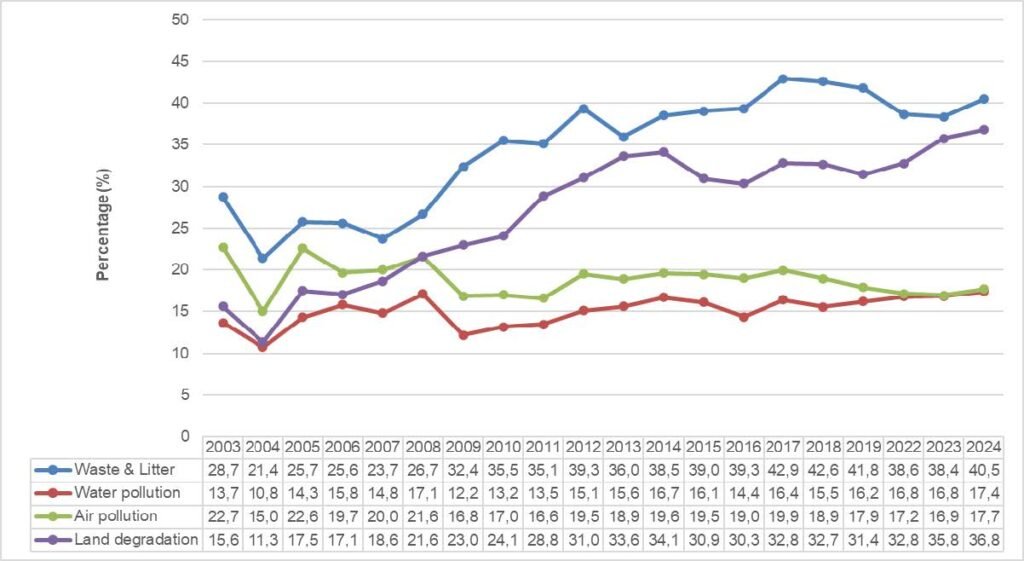
“Figure 13.1 reveals that waste removal problems and littering (40,5%), and land degradation and soil erosion (36,8%), were the two environmental problems that concerned the highest percentage of households in 2024. The proportion of households that felt that there were problems with littering and waste removal in their areas increased notably since 2009.”
— Statistics South Africa, General Household Survey 2024
This confirms that maintaining clean neighbourhoods is a growing national priority, reinforcing the importance of local waste management initiatives in Ward 56.